
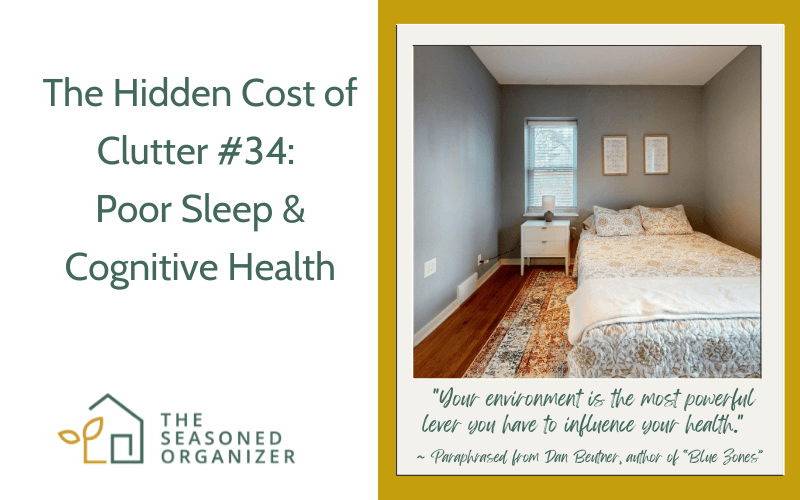
The order or disorder of your home has a profound effect on the way you think, feel, and behave. (It’s backed up by research.) An organized home can help you feel calm, composed, and in control. Those feelings often foster confidence, optimistic thinking, and generosity. On the other hand, a cluttered home can make you feel boxed in, anxious, and distracted. These feelings can spiral into pessimism and a scarcity outlook on life. For most folks, this intuitively makes sense.
What many people don’t realize is that a cluttered home may also interfere with one of the most important health habits we have: sleep.
Why Sleep Matters More Than You Think
Sleep isn’t simply a period of rest. It’s one of the most active and restorative processes in the human body.
During sleep, your body:
- Consolidates new memories and learning
- Repairs tissues and supports cell regeneration
- Strengthens the immune system
- Regulates hormones that influence appetite and weight
- Restores energy and supports cardiovascular health
Perhaps most fascinating of all, sleep allows your brain to perform essential housekeeping.
While you’re in deep sleep, your brain activates what scientists call the glymphatic system: a network that flushes waste products and toxins from brain tissue. Think of it as the brain’s overnight cleaning crew.
Just as your home functions better when clutter is removed, your brain functions better when cellular waste is cleared away.
The Sleep-Alzheimer’s Connection

Researchers are increasingly studying the relationship between sleep and Alzheimer’s disease.
During deep sleep, the glymphatic system helps remove proteins and waste products that naturally accumulate in the brain throughout the day. Scientists believe that when sleep is consistently disrupted, this cleaning process becomes less effective.
Studies have found links between chronic sleep deficiency and changes in the brain that are linked to Alzheimer’s disease. A July 2025 study found “ . . . preliminary evidence that reduced neuroactivity during sleep may contribute to brain atrophy, thereby potentially increasing the risk of Alzheimer’s disease,” said Dr. Gawon Cho, lead author of the study.
While poor sleep alone does not cause Alzheimer’s, growing evidence suggests that inadequate sleep may increase the risk of cognitive decline over time. In other words, sleep is not merely restorative- it may be protective.
For adults over 50, this is particularly important. Protecting brain health isn’t just working crossword puzzles, taking supplements, or exercising. It may also involve creating an environment that supports deep, restorative sleep every night.
Can a Messy Bedroom Affect Sleep?
According to sleep experts, the answer is Yes.
Dr. Chelsie Rohrscheib, a neuroscientist and sleep specialist, explains:
“The brain is a pattern recognition machine and makes strong associations between your environment and your behavior . . .
When your bedroom is calm, comfortable, and quiet, your brain will associate your bedroom with relaxation, making it much easier to relax and fall asleep.”
Conversely, a cluttered room can create visual noise that keeps your brain in a state of low-level alertness. Unfinished projects, piles of laundry, stacks of paperwork, and excess possessions can serve as subtle reminders of decisions, responsibilities, and tasks that still need attention. And even when you’re not consciously thinking about those items, your brain notices them.
When Sleep Suffers, Health Suffers
Chronic poor sleep has been associated with a variety of health concerns, including:
- Reduced immunity
- Increased appetite and weight gain
- Slower recovery from illness or injury
- Memory difficulties
- High blood pressure
- Increased risk of heart disease
- Mood changes and irritability
Over time, sleep deprivation affects nearly every system in the body.
That’s why creating a bedroom that promotes quality sleep is one of the most valuable forms of self-care.
Protecting Your Sleep Sanctuary

Sleep experts often recommend reserving the bedroom primarily for sleep and relaxation. That means reducing visual clutter and limiting items that don’t support rest.
A sleep-friendly bedroom might include:
- Comfortable, supportive bedding
- Soft, ambient lighting
- Minimal electronics
- A white noise machine or fan
- A book for reading before bed
- Clear surfaces and uncluttered floors
Think of your bedroom as a sanctuary- a space that signals to your brain: “It’s safe to relax here.”
Two Steps Toward Better Sleep
If you’re struggling with sleep, don’t overlook the role your environment may be playing. Here are two steps that can help your brain and body prepare for a better night’s sleep.
Step One: Declutter your Bedroom. (Surprise!)
- Clear off the tops of your dressers, nightstands, and any other flat surface. This reduces the visual clutter, giving your eyes a chance to rest, and your mind a clean palate before switching off.
- Remove paperwork, dishes from the Kitchen, and shopping bags and Amazon packages. This minimizes the “open loops” which your subconscious brain would otherwise notice.
- Pick up dirty clothing from the floor and place them in the laundry basket. Hang up the clean clothes from the bed or chair. Place shoes in the closet. Now you’ve got a calming, inviting place to relax.
Step Two: Create a Bedtime Routine
An hour-ish before bedtime:
- Prep for the next day. Select your clothing, review your calendar, and write down three priorities for the day.
- Sip a cup of chamomile tea with a dab of honey.
- Create a stretching routine to loosen your muscles and connect with your body.
- Read a relaxing book and/or write in your journal until your eyelids get heavy.
Small improvements in your environment can create meaningful improvements in your sleep. Better sleep supports a healthier brain. And a healthier brain supports a fuller, more vibrant life.
A tidy, ordered Bedroom may be one of the simplest ways to support your sleep, protect your brain, and invest in your future health.
Sources & Further Reading
- Newport Institute: How your physical environment affects your mental health
- Cleveland Clinic: The Glymphatic System and how it works with sleep
- American Academy of Sleep Medicine: The link between sleep and brain changes seen in Alzheimer’s disease
- American Heart Association: How sleep affects your health
- Sleep Specialists Management: A messy bedroom’s affect on sleep